

In the context of digital transformation and the rapid development of artificial intelligence, the way businesses operate is undergoing profound changes. This requires future managers to possess not only strong academic foundations, but also practical capabilities, innovative thinking, and the ability to adapt to a constantly evolving business environment.
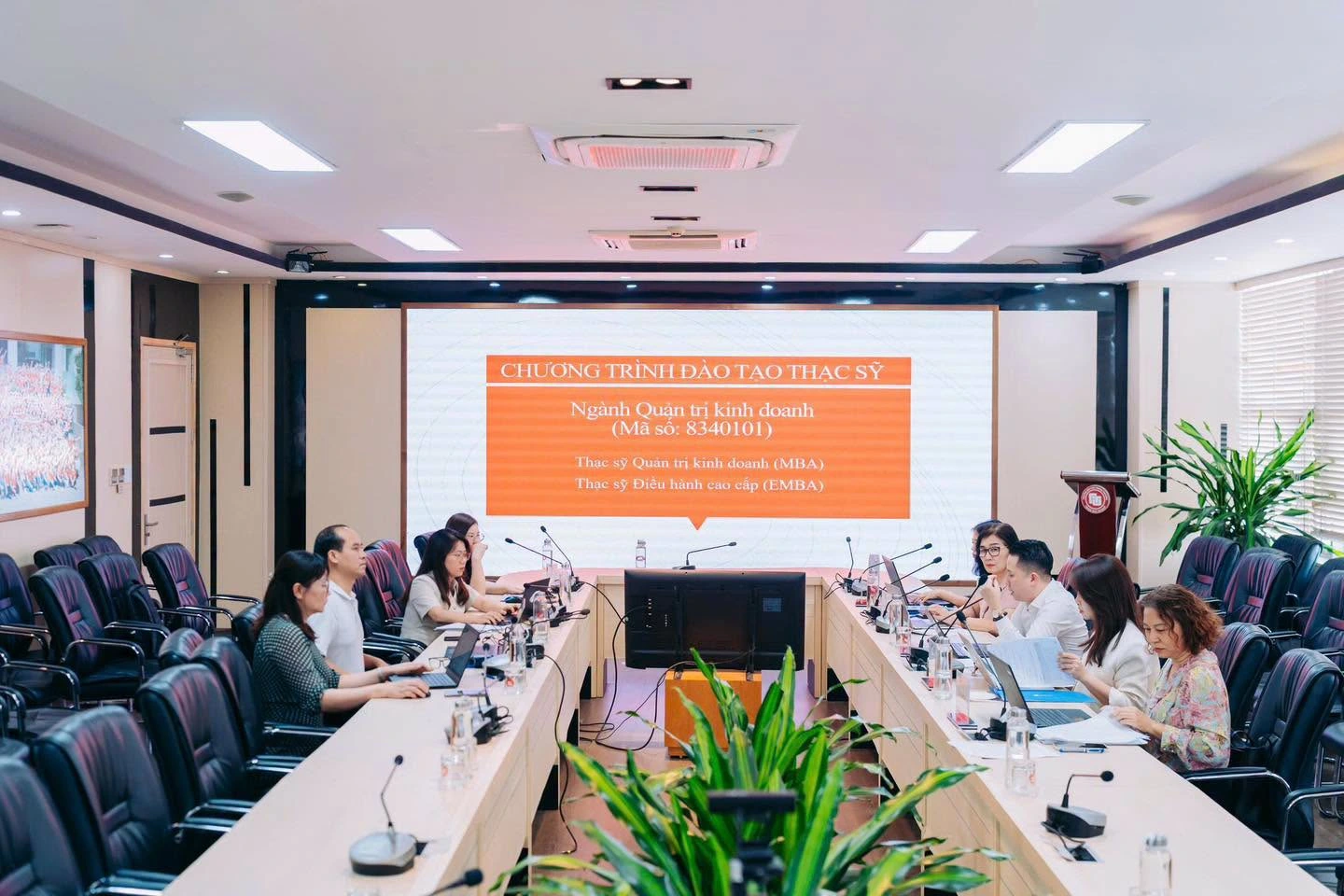
With a strong commitment to connecting education with business practice, the School of Business at Foreign Trade University recently organized the Evaluation Council for the Master of Business Administration (MBA) and Executive Master of Business Administration (EMBA) programs. The session brought together academics, experts, and business representatives to contribute perspectives on the development and refinement of the programs in line with contemporary management practices and market demands.
Representing the program development team were Assoc. Prof. Dr. Bui Thu Hien, Dean of the Faculty of Business Administration, School of Business; Assoc. Prof. Dr. Duong Thi Hoai Nhung; Assoc. Prof. Dr. Nguyen Hong Quan, Faculty of Business Administration; and Ms. Nguyen Thuy Hanh, representative of the Faculty of Graduate Studies.
The Evaluation Council included Assoc. Prof. Dr. Le Thi Thu Thuy, Chair of the Council and representative of Foreign Trade University; Assoc. Prof. Dr. Do Thi Tuoi, University of Labour and Social Affairs; Assoc. Prof. Dr. Le Tien Dat, Thuongmai University; Assoc. Prof. Dr. Nguyen Thi Hoa Hong, Foreign Trade University; and Ms. Phung Thi Hai Ha, Marketing Director at Base.vn, representing the business community.
Through the exchange between academia and business, the programs aim to equip learners with essential capabilities for effective management in a rapidly changing environment, including:
- Modern management capabilities in the context of digital transformation and AI adoption;
- Leadership and business management skills;
- Innovative thinking, strategic consulting, and decision-making capabilities;
- Professional competence and a strong sense of responsibility toward organizations and society.
The direct involvement of businesses in the development and evaluation of the programs serves as an important bridge between academic knowledge and real-world management requirements. This approach enables learners to engage with contemporary business challenges while developing the ability to apply knowledge effectively in practice.
With a learner-centered philosophy, the School of Business continues to innovate its academic programs by strengthening the connection between education, research, and business practice. These efforts aim to prepare the next generation of business leaders with the adaptability, innovative mindset, and leadership capabilities needed to navigate an increasingly dynamic business environment.